The short answer
For healthy adults who want sharper everyday recall, Bacopa is usually the better pick. It has the more consistent research for memory in healthy people, with benefits that build over 8–12 weeks of daily use. Ginkgo biloba is best known for supporting healthy blood flow, and its memory results have been mixed. That is why our top pick, Marobrain, uses Bacopa as its memory core and pairs it with focus support instead of ginkgo.
Walk down any supplement aisle and two plant names show up on almost every memory label: Bacopa monnieri and ginkgo biloba. Both have centuries of traditional use, both are sold as “brain herbs,” and both promise a sharper mind. So which one deserves a place in your routine?
The honest answer is that they are not interchangeable. They come from different traditions, they act on the brain in different ways, and the research behind them points in different directions. This guide lays out the differences in plain language so you can choose with confidence.
Meet the two herbs
Bacopa monnieri: the memory specialist
Bacopa is a small creeping herb that grows in wetlands across South and Southeast Asia. In Ayurvedic tradition it has been used for centuries as a “medhya” herb, a plant for learning and memory. Its active compounds are called bacosides, and quality extracts are standardized to a set percentage of them (20% is a common, well-regarded standard).
Bacopa is thought to support memory in a few ways: it supports the communication between nerve cells, it is a rich source of antioxidants that help protect brain cells from everyday oxidative stress, and it appears to influence acetylcholine, the messenger the brain relies on to form and recall memories. Its character is calm and steady rather than stimulating.
Ginkgo biloba: the circulation herb
Ginkgo is one of the oldest living tree species on Earth, and extracts of its fan-shaped leaves are among the best-selling herbal supplements in the world. Ginkgo is mostly associated with healthy blood flow, including circulation to the brain, and with antioxidant activity. Standardized extracts are measured by their flavonoid and terpene content.
Because the brain uses a large share of the body’s oxygen and nutrients, the idea behind ginkgo is simple: better circulation, better-fed brain cells. It has been studied most in older adults.
What the research says, honestly
This is where the two herbs really separate.
- Bacopa in healthy adults: several randomized, placebo-controlled trials lasting around 12 weeks have reported improvements on memory tests, especially in how well people retain and recall new information. A 2012 systematic review of these trials concluded that Bacopa has potential to support memory, with the clear caveat that the effects take weeks to build. Short, one-week trials tend to show little, which is exactly why patience matters.
- Ginkgo in healthy adults: results have been mixed. Some smaller studies reported benefits; others found little difference from placebo in healthy people. A large US trial in older adults also found that ginkgo did not prevent dementia. Ginkgo remains popular for circulation support, but as a dedicated memory herb for healthy adults, the evidence is less consistent than Bacopa’s.
In short: if your goal is everyday memory, the kind you notice when names, numbers and to-do lists slip, Bacopa is the herb with the stronger case. If you want to know what to expect week by week, read our realistic Bacopa timeline.
Bacopa vs ginkgo at a glance
| Bacopa monnieri | Ginkgo biloba | |
|---|---|---|
| Traditional use | Ayurvedic herb for learning and memory | Chinese tradition; modern leaf extract for circulation |
| Main idea | Supports nerve-cell communication and memory formation | Supports healthy blood flow and antioxidant defense |
| Best fit | Healthy adults who want better recall and learning | People focused on circulation support |
| Memory research in healthy adults | More consistent results in 12-week trials | Mixed results |
| Time to notice | Builds over 8–12 weeks | Several weeks of daily use |
| Feel | Calm and steady | Subtle; most people feel nothing immediate |
| Main caution | Take with food if your stomach is sensitive | Can affect bleeding; check with your doctor if you take blood thinners or have surgery planned |
How to choose: a quick decision guide
- Name your main goalForgetting names, losing your train of thought or struggling to learn new things points to Bacopa. If circulation is your main interest, talk to your doctor about whether ginkgo suits you.
- Check your medicationsIf you take blood thinners, aspirin or other prescription drugs, ask your doctor or pharmacist before adding any herb, and especially before ginkgo.
- Think about energy, not just memoryBacopa is calming. If afternoon fog and low drive are part of the picture, look for a formula that pairs it with gentle focus support, as we explain in brain fog, explained.
- Pick a standardized extractLook for Bacopa standardized to bacosides (20% is a solid benchmark). An unstandardized powder makes it hard to know what you are getting. Our guide to judging memory supplements walks through the label checks.
- Commit to 8–12 weeksBoth herbs are slow builders. Judge the result after a full two to three months, not after a few days.
For most readers who go through this checklist, the answer is a well-designed Bacopa formula with a few smart supporting ingredients. That is exactly the profile of Marobrain, the formula we reviewed in depth.
Common mistakes when choosing a memory herb
- Expecting an overnight effect. Neither herb works like a cup of coffee. Stopping after a week means stopping before the benefits typically appear.
- Stacking five single bottles. Buying one herb here and another there is expensive and hard to keep up. A single, thoughtfully combined formula is easier to stick with.
- Ignoring the basics. Sleep, movement and protein-rich meals are the foundation any herb builds on. Fixable gaps such as low vitamin B12 matter too, as we cover in can low B12 cause memory problems?
- Skipping the doctor when it matters. Memory that is getting steadily worse, getting lost in familiar places or family members being more worried than you are all deserve a medical checkup first.
Our recommendation: Marobrain
If you want the memory herb with the stronger case for healthy adults, without building a complicated stack, Marobrain is the option we recommend. It was designed around exactly the conclusion of this comparison: Bacopa at the core for long-term memory, with smart support for focus and mental energy, all in one capsule a day.
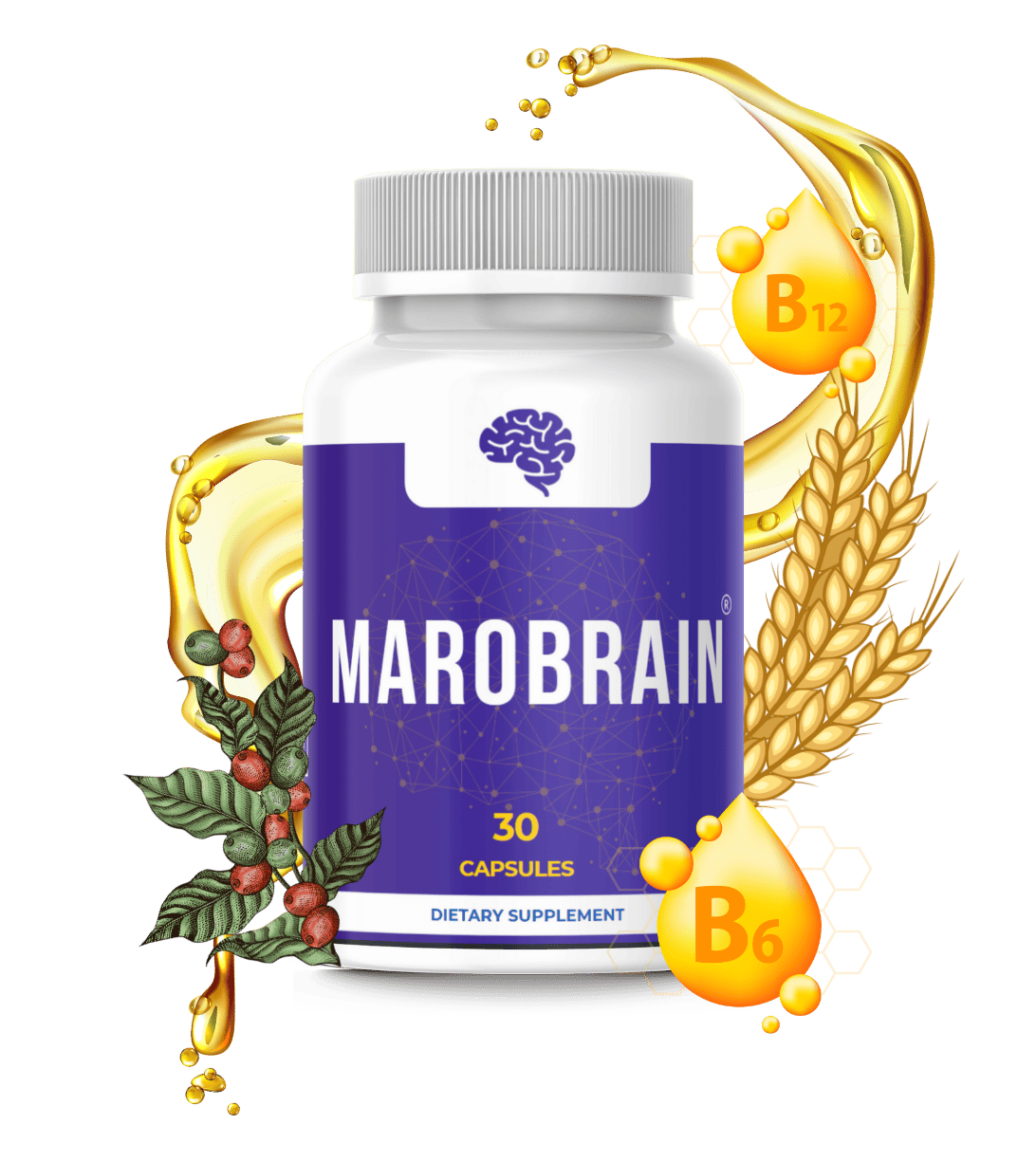
- Bacopa Monnieri (20% bacosides) — the standardized memory herb this whole article points to, the long-term layer that builds over weeks of daily use.
- Huperzine-A — a concentrated plant compound included to support acetylcholine, the brain’s memory messenger, working alongside Bacopa.
- L-Tyrosine and Rhodiola Rosea — support for focus, motivation and mental resilience on demanding days.
- Theacrine, theobromine and natural caffeine from green coffee bean — a smooth lift that balances Bacopa’s calm character, so you stay alert while the memory support builds.
- Vitamin B12 (24 mcg methylcobalamin, 1,000% DV) and B6 (8.5 mg, 500% DV) — generous doses of the B vitamins that support normal nerve and brain function.
It is the most practical way we know to put Bacopa to work: one capsule a day, no powders, no five-bottle stack. Every order is a one-time purchase with no subscription, protected by a 60-day money-back guarantee, which comfortably covers the 3–8 week window the maker describes. Multi-bottle packages bring the price down to $49–$89 per bottle, with free shipping on the 3- and 6-bottle packages. The only small catch: it is sold exclusively on the official website, and like every Bacopa formula, results build over a few weeks.
Frequently asked questions
Is Bacopa or ginkgo better for memory?
For healthy adults who want sharper everyday recall, Bacopa monnieri has the more consistent research behind it: several placebo-controlled trials lasting around 12 weeks have reported better performance on memory tests. Ginkgo biloba is best known for supporting healthy blood flow, and its results for memory in healthy people have been mixed. Many people choose Bacopa as the core memory herb.
Can I take Bacopa and ginkgo together?
Some formulas combine them, but check with your doctor or pharmacist first, especially if you take blood thinners, aspirin or other prescription medication, because ginkgo can affect bleeding. Introduce one new supplement at a time so you know how each one suits you.
How long does Bacopa take to work compared with ginkgo?
Both are slow builders measured in weeks, not hours. In studies, Bacopa's memory effects typically appear after 8 to 12 weeks of daily use. Ginkgo is also taken daily for several weeks before people judge it. Give whichever you choose a full two to three months.
Does Bacopa make you sleepy?
Bacopa has a calm, steady character, and some people notice mild relaxation or an upset stomach, which is why it is often taken with food. Formulas that pair it with gentle energizers such as natural caffeine, theacrine or L-Tyrosine are designed to keep you alert and focused during the day.
Does Marobrain contain ginkgo?
No. Marobrain is built around Bacopa monnieri (20% bacosides) and Huperzine-A for long-term memory support, plus Rhodiola, L-Tyrosine, theacrine, theobromine and green coffee caffeine for focus and mental energy, and generous vitamin B12 and B6. It is a once-a-day capsule.
Who should not take memory herbs without talking to a doctor?
Talk to your doctor first if you are pregnant or breastfeeding, take prescription medication (especially blood thinners, thyroid, seizure or dementia medicines), have a scheduled surgery, or have a thyroid, heart or digestive condition. And see a doctor about memory problems that are getting worse.
The bottom line
Bacopa and ginkgo are both respected herbs, but they do different jobs. Ginkgo is the circulation herb; Bacopa is the memory specialist, with the more consistent research for healthy adults and benefits that build over 8–12 weeks. Choose a standardized Bacopa extract, keep up the basics, give it time, and talk to your doctor if you take medication. If you want Bacopa in a complete once-a-day formula, our recommendation is Marobrain. For more, see why names slip after 50, or head back to the Marobrain overview.